· By Chris Gee
AI didn’t just kill the resume. AI wrote the autopsy.
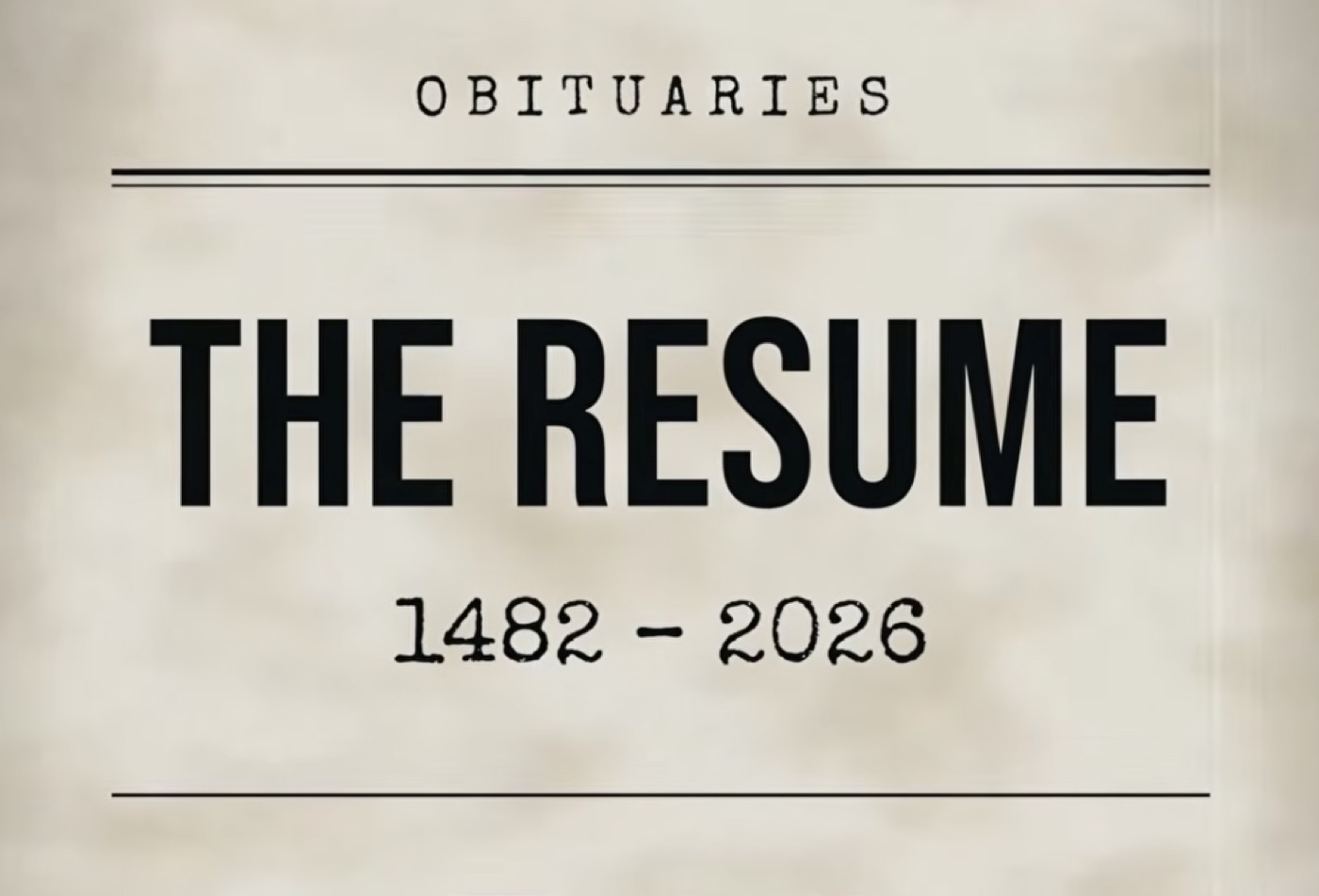
The resume died this year. By most accounts, it was 544 years old.
Once upon a time, in 1482, Leonardo da Vinci wrote a letter to the Duke of Milan listing the things he could build. Historians often call it the first resume.
He mostly pitched war machines and barely mentioned he could paint. Even the first resume was tailored to the job description.
For the next five centuries, this resume format did the job of compressing a life’s work into a single page that a powerful person might read.
Back then, it was always a bandwidth solution. Paper was scarce, and attention was limited. One typed page was all the information you could send.
But one day, the bandwidth problem disappeared.
Software could read ten thousand resumes at once. Candidates could generate a hundred tailored resumes in an afternoon.
Because of that, companies installed machines (ATS) to scan for keywords.
And because of that, candidates used machines to produce those keywords.
The space race continued until LinkedIn was eventually processing 11,000 applications a minute. One recruiter pulled a listing after 1,200 applications for a single remote role, and both sides of the hiring equation agreed on one thing:
The process was broken, and the resume no longer served its purpose.
But the resume was never the product.
It was merely a vehicle. A way of saying: I did the work to show you who I am. The resume was just the container. What died wasn’t the resume itself, but its ability to communicate value.
And ever since, that value has been moving to places a keyword can’t reach. The portfolio that shows the prompts next to the outputs. The live working sessions. The person who can sit in a room and let you watch their judgment operate in real time.
Da Vinci, for the record, got the gig. The letter got him the audience he sought. But the work kept him in Milan for nearly two decades.
The resume was, at best, a promise to be verified later. So, if the resume disappeared tomorrow, what proof of your work would still exist? Let me know on LinkedIn.